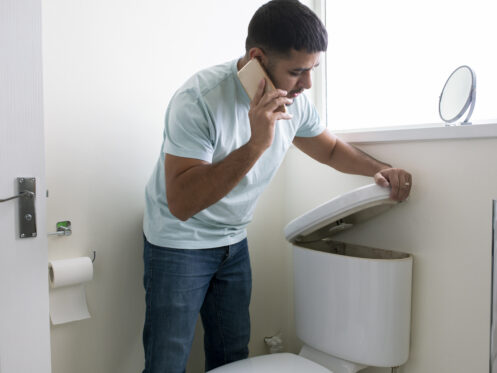
The sound of your toilet tank randomly refilling isn’t harmless. In addition to wasting water, it’s also slowly wearing down the parts inside. At Plumbtree Plumbing & Rooter, in San Jose, CA, we’ve seen how one small leak or valve problem can turn into higher bills or constant annoyance. Find out more about what causes this problem and what you should do about it.
How a Flapper Valve Loses Its Seal
The rubber flap at the bottom of your tank lifts when you flush, then drops back down to hold water in the tank until the next flush. Over time, it warps or stiffens, especially if you’ve got chlorinated water or use in-tank cleaning tablets. Once the seal breaks, water slips into the bowl, even if the toilet hasn’t been touched. The tank refills to replace what’s lost, which makes it sound like someone just flushed.
If you press down on the flapper and the sound stops, that’s usually confirmation. Sometimes, buildup around the valve seat adds to the problem, making it harder for the flapper to sit flat. Even barely visible damage in the rubber can be enough to keep the water leaking slowly. If the flapper looks worn or doesn’t fall into place smoothly, it probably needs to be replaced. That’s one of the easiest parts to swap out, but it still matters.
Problems With the Fill Valve or Float
A running toilet can also start with the part that controls the amount of water in the tank. If the float gets stuck or misaligned, the fill valve may stay open longer than it should. That allows water to climb too high in the tank until it spills into the overflow tube. From there, it cycles straight into the bowl. It’s a silent process, which makes it hard to catch until you spot a higher water bill or hear the toilet refilling later.
Old-style ball floats sometimes sit too low, keeping the fill valve stuck in the open position. Newer cup-style floats can jam on the tank’s guide rail. The float needs to move freely, or the water line in the tank will stay off target. If the fill valve itself is damaged, it may not shut off at all. You could end up with a slow trickle from the tank even if everything else looks normal. That’s why it’s worth checking the float’s movement and the water level against the markings inside the tank.
Hard Water Buildup Around Moving Parts
If your toilet parts are coated in white, crusty mineral buildup, hard water might be the root of the issue. Calcium and magnesium stick to rubber, plastic, and metal, especially where water flows or pools. That buildup prevents the flapper from sealing properly or makes the float valve grind instead of glide. It turns a smooth-moving mechanism into one that hesitates, sticks, or fails to reset the way it should.
Sometimes, you may see scale collecting around the flush valve or on the refill tube. When enough of it builds up, parts stop working the way they were designed to. Water gets around seals, or the refill process takes too long. Even if you clean your tank, hard water continues to feed the same problem every day. In cases where buildup is heavy, it might be easier to swap out the entire fill system instead of trying to scrub it clean and keep it working.
What Happens When the Overflow Tube Fails
The overflow tube in your tank prevents the water from rising too high. If something blocks that tube or if it cracks near the base, water may leak into the bowl even when the tank is full. You might not notice anything strange until the refill kicks in to top off that lost volume. It sounds like a flush, but it happens with no one in the bathroom. That phantom sound usually means the water level is dropping when it shouldn’t.
If the tube is loose or out of position, water will leak into it faster than normal. A refill cycle might happen every 30 or 40 minutes, even if the toilet hasn’t been touched. The tricky part is that a failing overflow tube can be hard to spot from the outside. It may look perfectly fine until you run a dye test or notice water lines that dip just below the top of the tube. That’s usually a sign that something’s off inside the tank.
Leaks in the Flush Handle Assembly
If the flush lever feels loose or the chain hangs awkwardly, the toilet may keep running because the flapper never reseats. Sometimes the flush rod gets bent, or the chain becomes too short to let the flapper drop back into place. When that happens, the flapper stays open by just a sliver, letting water slip through. That’s enough to keep the refill cycle going in the background all day.
Another problem shows up when the chain catches under the flapper. It may look like the valve closed properly, but the chain holds it open just enough to leak. If you have to jiggle the handle to stop the water sound, something’s wrong with the connection between the lever and the flapper. That’s often a hardware issue, not just a matter of usage. Replacing the handle and re-threading the chain to the correct length usually fixes it fast.
Toilet Parts That Just Wore Out
Toilet tank parts don’t last forever. Even if you’re not flushing frequently, the moving parts still sit in water all day. That means rubber seals, washers, and moving plastic parts all break down eventually. Sunlight from a nearby window, chlorine-heavy water, or worn-out seals on older models make random running more likely. In some cases, everything looks clean and intact, but the parts still no longer function properly.
One sign is when you shut off the water to the tank and everything looks quiet. Then, once you turn it back on, the tank doesn’t refill normally. That may mean the fill valve is stuck or the gasket on the flapper has flattened out too much to make a seal. If you’ve replaced one part and the toilet still keeps running, another worn part might be affecting the whole system. Age, usage, and water quality all factor in, even if your toilet looks spotless on the outside.
Silent Leaks That Waste Water Daily
A toilet that runs randomly is often a toilet that’s wasting water constantly. Even when it sounds quiet, small leaks from the tank into the bowl add up fast. One easy test involves putting a few drops of food coloring in the tank and waiting 20 minutes. If the color shows up in the bowl without flushing, water is escaping somewhere it shouldn’t. That leak doesn’t just affect your bill. It also means the toilet’s fill valve keeps working harder than it should.
What you hear is a refill cycle. What you don’t hear is the leak that triggers it. If your toilet fills back up after sitting idle, water has gone missing from the tank. That might not cause a flood, but it will quietly raise your usage numbers by a few gallons each day. Silent leaks often point back to aging parts, but sometimes it takes a fresh set of eyes to catch what’s wrong. If the flapper test and float inspection don’t work, you may be dealing with a deeper mechanical problem.
Call Us Today To Fix Your Toilet Refill Problem
When a toilet refills itself without being flushed, it’s not just wasting water; it’s trying to tell you something. Whether it’s a small leak into the bowl or a failing valve, problems like these tend to grow if they’re ignored. If repairs haven’t worked or your plumbing system looks outdated, it might be time for professional help. Plumbtree Plumbing & Rooter handles toilet repairs, replacements, and other plumbing problems with care and clarity.
Give Plumbtree Plumbing & Rooter a call, and let’s get your bathroom back on track.